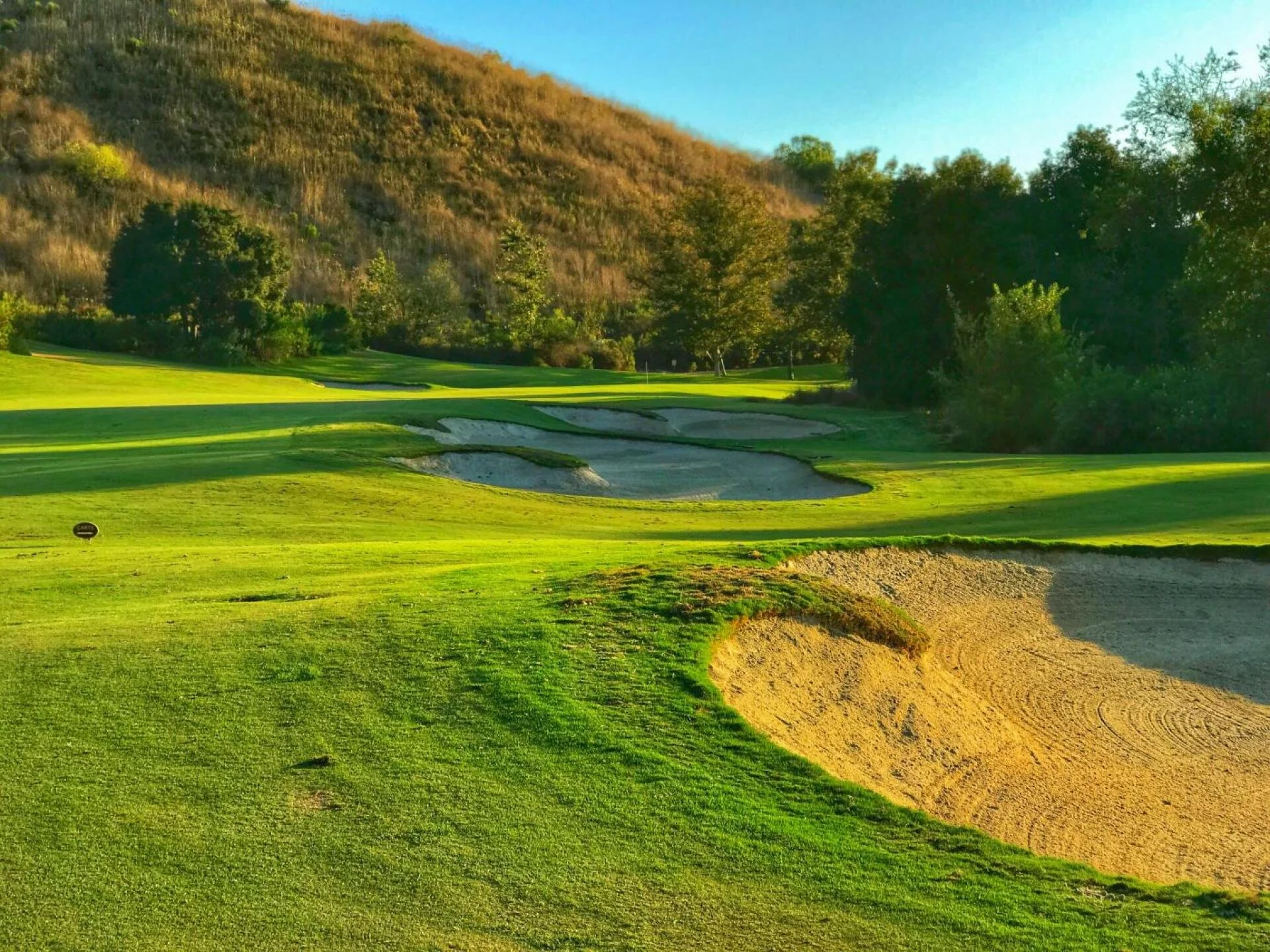
Orange County: Where Coastal Polish Meets Strategic Golf.
Orange County golf sits at the intersection of coastal California polish and thoughtfully preserved inland terrain, routed through canyons, former ranch land, and master-planned communities that still allow the landscape to lead. Positioned between the urban energy of Los Angeles and the relaxed coastal rhythm of San Diego, the region’s public golf reflects a balance of refinement, playability, and understated quality. Courses favor strategic angles, elevation shifts, and natural corridors over brute force, rewarding positioning and patience rather than length alone. The result is a collection of public-access layouts that delivers a private-club sensibility, pairing strong architecture with a distinctly Southern California sense of place.
Featured Golf Courses
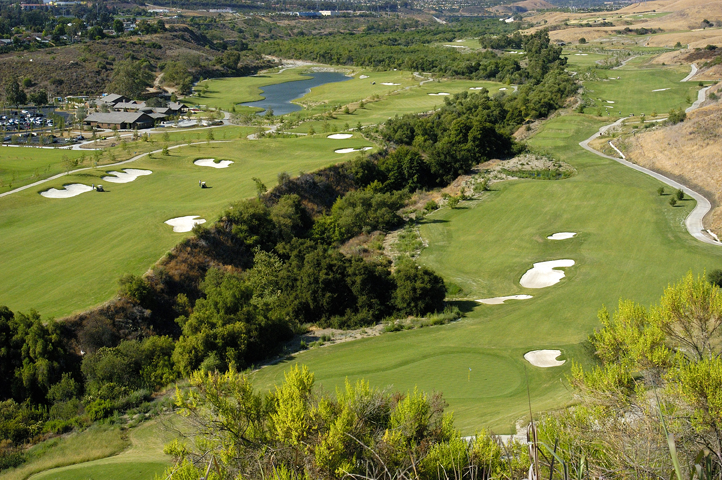
Arroyo Trabuco Golf Club – Mission Viejo, CA
Architect: Casey O'Callaghan & Tom Lehman (2004)
Arroyo Trabuco moves confidently across rolling terrain shaped by natural arroyos and subtle elevation change, using the land’s contours to dictate strategy rather than overpower it. The routing shifts direction frequently, asking golfers to think carefully about angles off the tee and approach positioning. Greens are contoured with restraint, relying on slope and placement instead of heavy bunkering to test precision. The design feels modern and purposeful, grounded in Southern California topography and well suited to repeat play.

Strawberry Farms Golf Club – Irvine, CA
Architect: Jim Lipe (1997)
Strawberry Farms unfolds in two distinct acts, with an open, gently rolling front nine giving way to a more dramatic back nine defined by wetlands, water hazards, and tighter driving corridors. Strategy centers on managing angles into green complexes while navigating elevation changes that subtly influence club selection. The canyon setting and reservoir backdrop shape the course’s personality, creating visual interest without forced drama. When pace of play and conditions align, it offers a varied and engaging test.
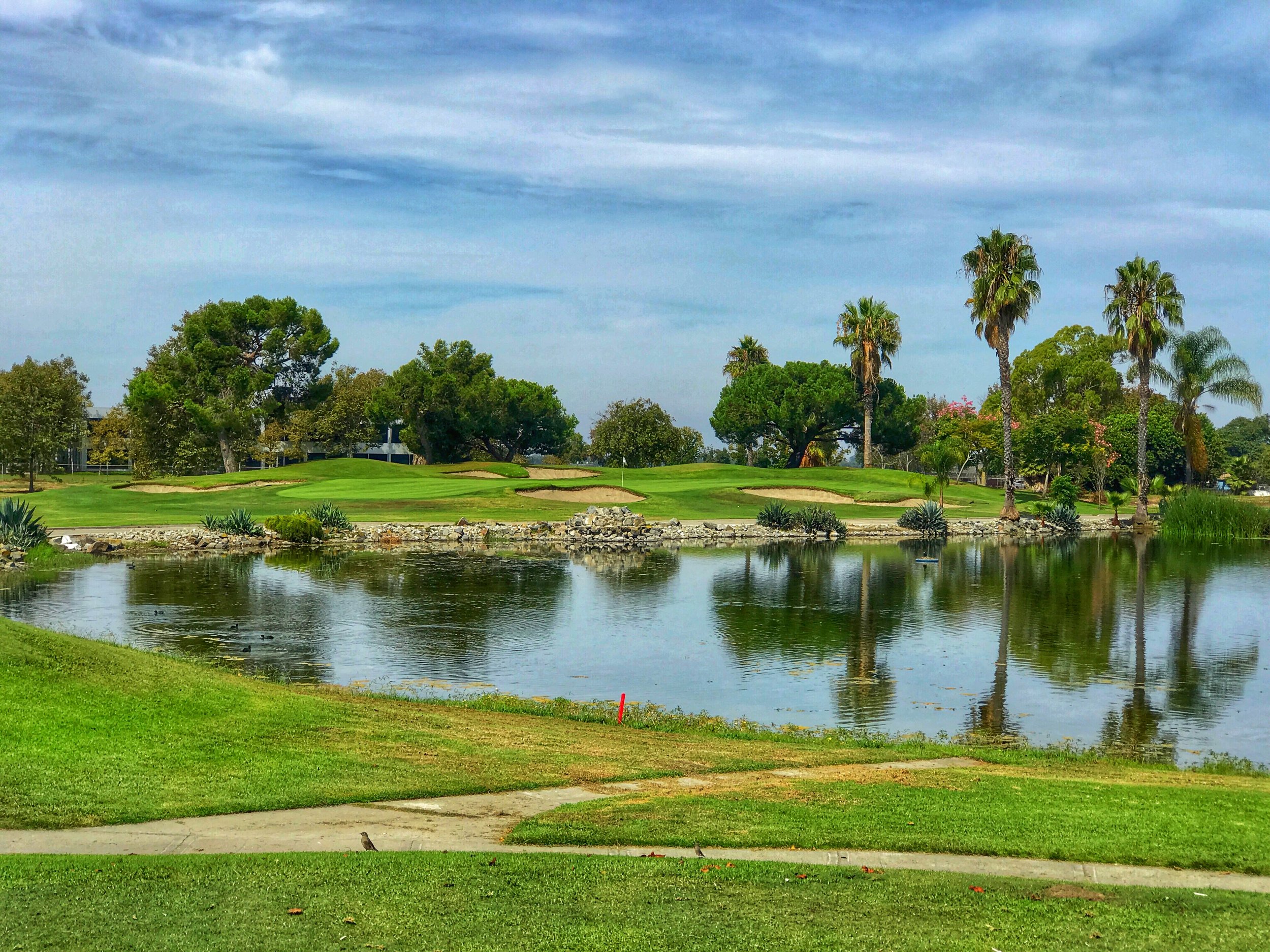
Navy Golf Course, Destroyer – Cypress, CA
Architect: William P. Bell & Joe Williams (1966); restored by Ted Robinson & Casey O'Callaghan
Built on mostly level ground and framed by mature trees, Destroyer relies on classic architectural principles including fairway angles, cross-bunkering, and greens that reward precise approaches. The layout delivers a clean, traditional test that feels understated yet intentional. Tiger Woods’ childhood connection adds historical resonance, while the setting on an active Navy base creates a uniquely structured and purposeful atmosphere. It is a rare public experience that blends golf history with living context.
Plan Your Next Trip the Right Way
See how the courses, hotels, and areas sit relative to each other in Orange County.
Insider Notes:
Best Time to Play: Navy Golf Course, Destroyer tends to play slower on Mondays, with Tuesday through Friday generally offering better pace.
Pelican Hill Golf Club: 36 holes, Pelican Hill is a premium option for golfers looking to add a high-end coastal round beyond the core collection.
Golf Experience: Orange County courses reward positional play over power, particularly on approach shots where angles often matter more than distance.
Crystal Cove State Park: Offers coastal trails, tide pools, and a historic district of beachfront cottages that pair well with a morning round.
Farmers Market: Weekly farmers markets in Newport Beach, Laguna Niguel, and Costa Mesa are strong local stops for fresh, regional flavor.
Airport Access:
John Wayne Airport (SNA)
Strawberry Farms Golf Club: ~15 minutes
Arroyo Trabuco Golf Club: ~25 minutes
Navy Golf Course, Destroyer: ~25 minutes
Pelican Hill Golf Club: ~15 minutes
Driving Times:
Los Angeles, CA: ~1 hour
San Diego, CA: ~1 hour 30 minutes
Palm Springs, CA: ~1 hour 45 minutes
Santa Barbara, CA: ~2 hours 30 minutes