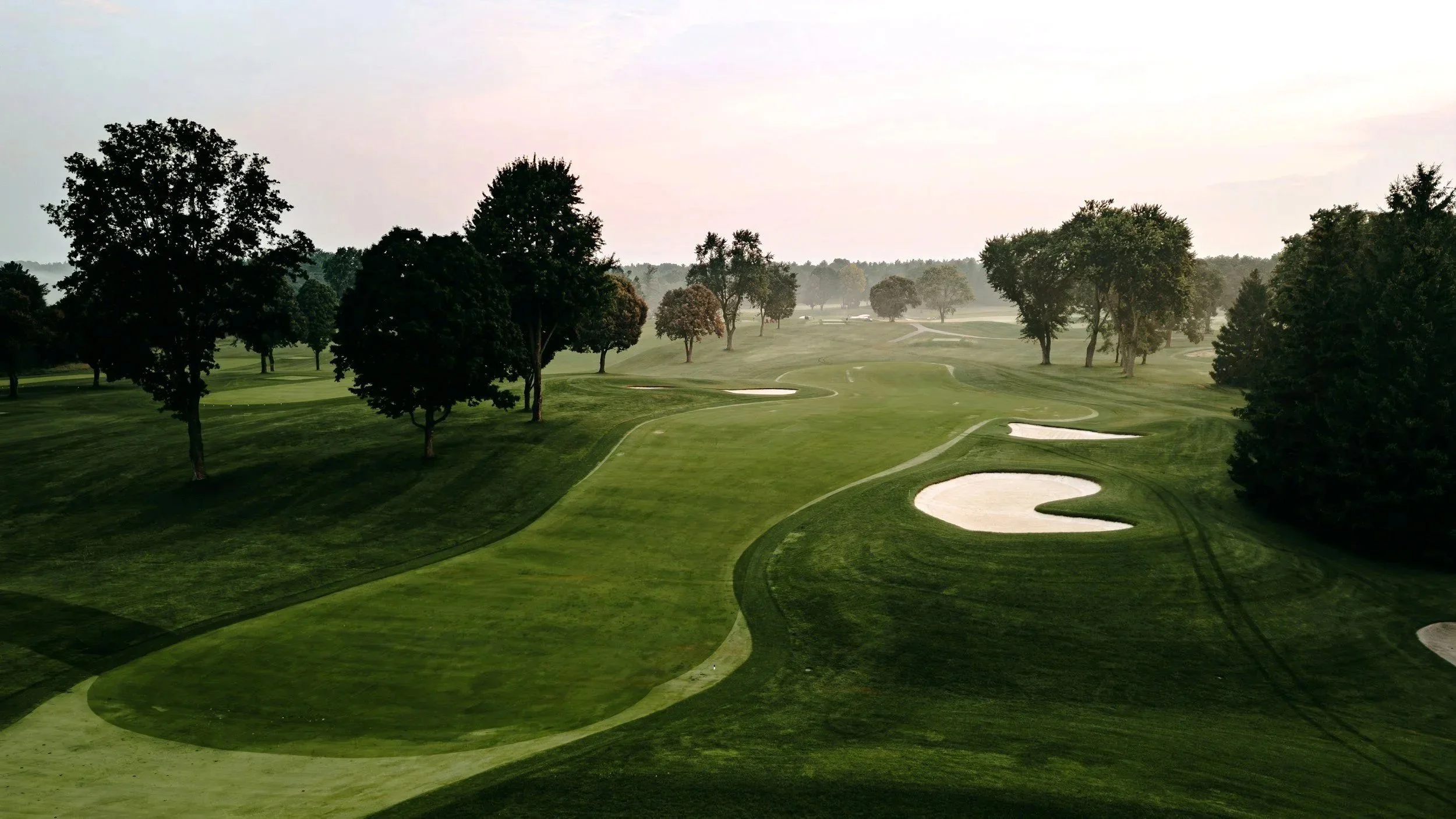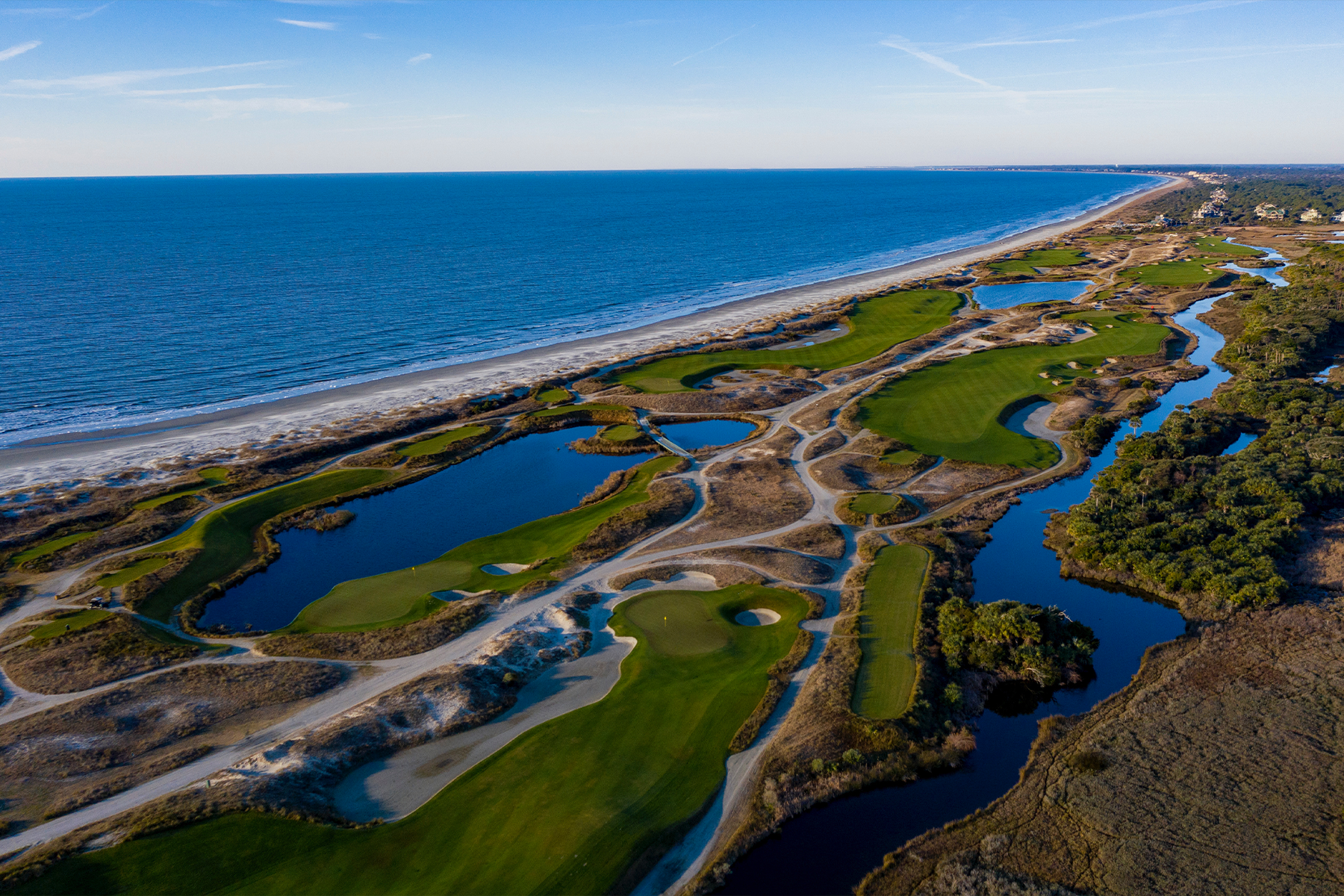
Kiawah Island: Where Every Round Feels Elemental.
Golf on Kiawah Island unfolds in rhythm with the Lowcountry landscape, shaped by coastal winds, wide skies, and corridors of live oaks draped in Spanish moss. Fairways move naturally through marsh, maritime forest, and dune terrain, creating rounds that feel closely tied to the land and the elements. Golf here is part of a broader way of life, with afternoons on the course giving way to quiet evenings around the village and waterfront dining. The result is an authentic coastal experience anchored by some of the finest golf in the country.
Featured Golf Courses
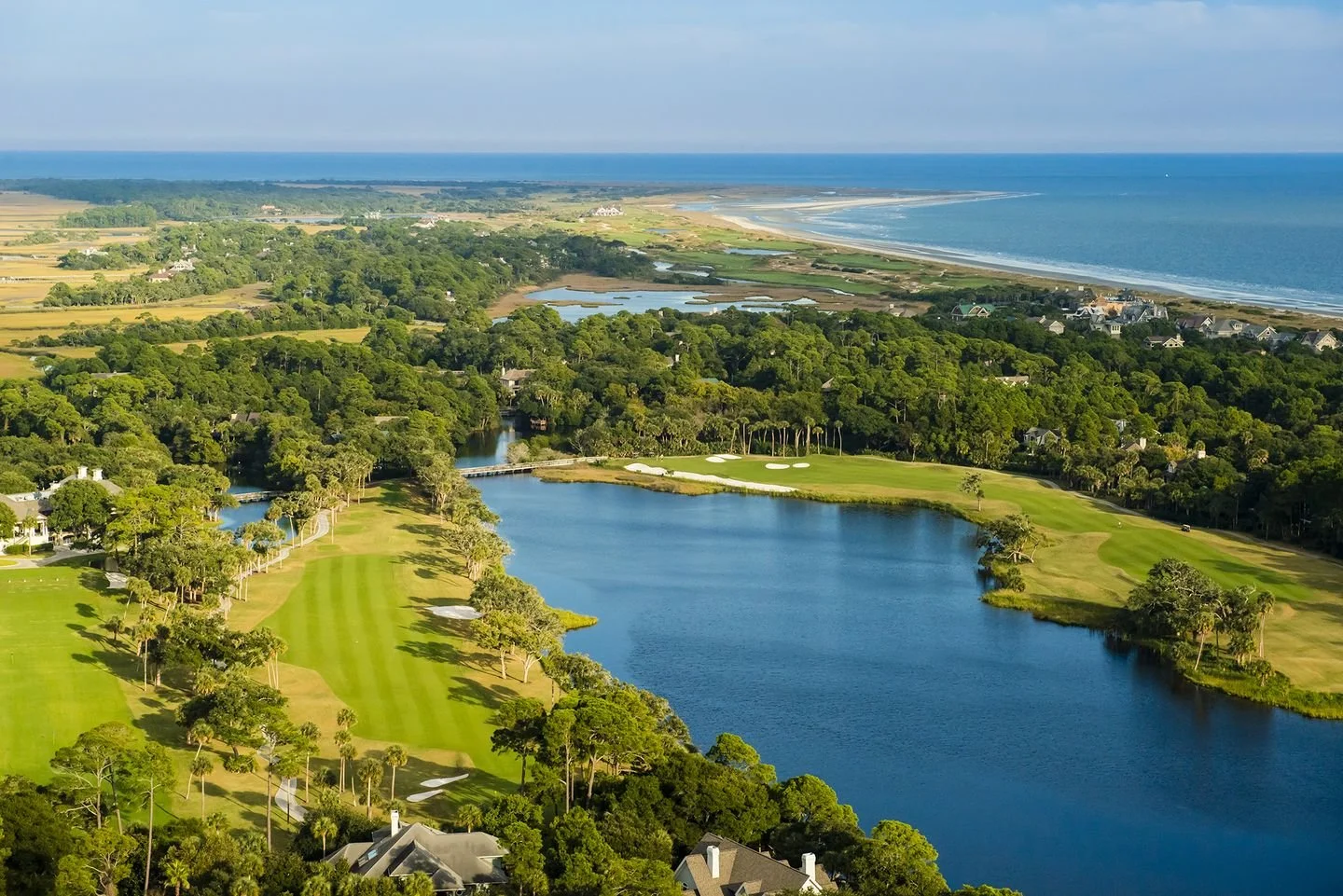
Osprey Point – Kiawah Island, SC
Architect: Tom Fazio (1988)
Osprey Point reflects Tom Fazio’s ability to shape golf around sensitive coastal terrain, with holes routed around natural lakes, salt marsh channels, and stands of pine and live oak. The layout asks for a variety of shot shapes and trajectories, rewarding creativity without feeling overly demanding. Strategic bunkering and subtle green contours guide play while maintaining a smooth, unforced flow. It’s an inviting course that offers depth and variety over repeated rounds.
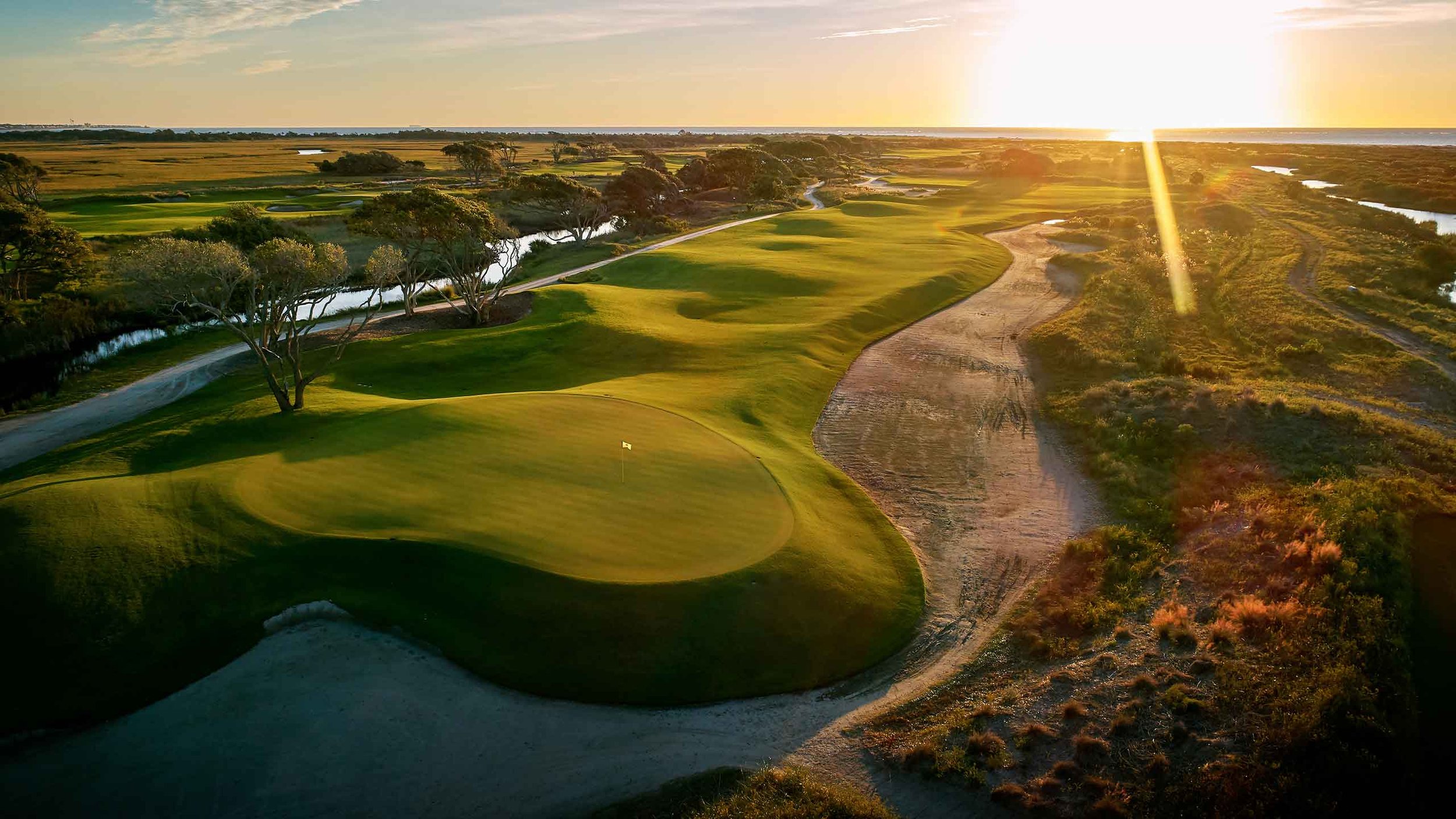
The Ocean Course – Kiawah Island, SC
Architect: Pete Dye & Alice Dye (1991); Restored by Scot Sherman
The Ocean Course is defined by exposure, elevation, and constant interaction with the Atlantic. Fairways and greens are raised above the dunes, ensuring that wind influences every decision from the opening tee shot to the final putt. Ten holes run directly along the beach, while others turn inland through marsh and sandy terrain, creating dramatic shifts in strategy and feel. Visual intimidation, preferred angles, and wind management combine to deliver one of the most memorable seaside rounds in the world.
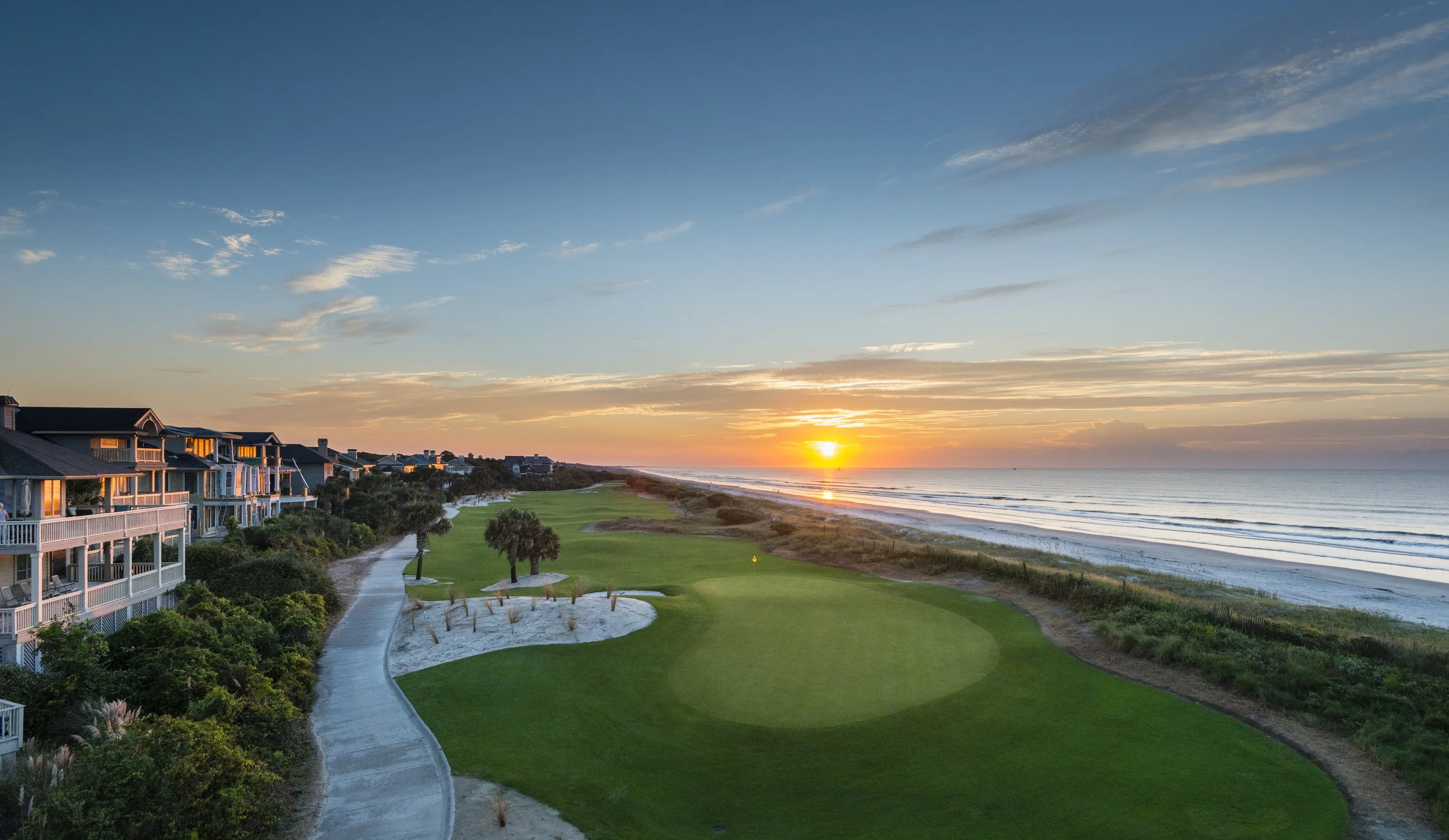
Turtle Point – Kiawah Island, SC
Architect: Jack Nicklaus (1981); Restored by Jack Nicklaus
Turtle Point offers a more restrained but highly strategic complement to Kiawah’s other courses. Nicklaus uses marsh edges, lagoons, and narrow corridors to emphasize precision and thoughtful positioning over power. Tight fairways and well-protected greens reward players who control trajectory and angle into the hole. The result is a refined test that appeals to golfers who appreciate strategic nuance and classic design principles.
Plan Your Next Trip the Right Way
See how the courses, hotels, and areas sit relative to each other in Kiawah Island.
Insider Notes:
The Ocean Course is walking-only most of the year, with carts permitted only during summer months and restricted to paths.
Non-resort guests can book tee times on all Kiawah courses, making it possible to play without staying on the island.
Kiawah Island Golf Resort typically schedules aerification during summer months, with individual course closures staggered across June, July, and August.
Late fall through early spring generally offers drier conditions and milder temperatures, ideal for golf and outdoor activities.
Kiawah Island’s extensive network of paved trails and beach paths makes biking an easy way to explore marshes, forests, and shoreline between rounds.
Airport Access:
Charleston International Airport (CHS)
Turtle Point at Kiawah Island: ~50 minutes
Osprey Point at Kiawah Island: ~55 minutes
The Ocean Course: ~1 hour
Driving Times:
Charleston, SC: ~45 minutes
Savannah, GA: ~2 hours 10 minutes
Columbia, SC: ~2 hours 30 minutes
Myrtle Beach, SC: ~2 hours 40 minutes
Augusta, GA: ~3 hours 20 minutes
Charlotte, NC: ~3 hours 40 minutes
Fayetteville, NC: ~3 hours 50 minutes
Jacksonville, FL: ~4 hours
Osprey Point – Kiawah Island, SC Reviews
-
“Possibly the most aesthetically beautiful of the five public courses and in my opinion, the most getable and forgiving of them all a great choice for resort guest if you want an easy, beautiful, fun round of golf without being challenged too much at the ocean or cougar. this would be my choice."
-Noel
-
"Really enjoyed this course. Excellent grounds. Lots of time on the range and putting greens before you play. Round was well paced. Greens totally fair for an average golfer like me. Entire course was well manicured and a lot of fun to play"
-David
-
"Such a fun course. The conditions were perfect. Everyone there was friendly and helpful. Driving range grass hitting areas were in great shape. Electric carts all worked well. The course itself is beautiful. Lots of holes along the water lots of trees and plants make you feel like you're in nature. There are houses but well hidden. Never felt like I was going to hit a house. Greens rolled true and most had some slope but nothing terribly hard. All in all a very fair course for a variety of skill levels. I had a great time and highly recommend it."
-Ben
The Ocean Course – Kiawah Island, SC Reviews
-
"Amazing course, beautiful views, and the most wonderful experience with our caddies — Braedon and Brandon! They truly made the day that much more memorable and enjoyable. Thank you, gentlemen for making us feel right at home on the course — we can’t wait to come back!"
-Patti
-
"I was just a little bit nervous to play this course, but my fears were put to rest as I was told that even a mid level player like me were welcome! (Thank you, Owen!) Wow! I am so glad that I didn’t let my doubt keep me from playing this course! It was absolutely gorgeous and the vistas were stunning! It’s hard to capture the beauty of this course! Our caddie, Mike, was so attentive and gave just the right amount of advice! What a day! I can’t wait to play it again sometime!"
-Bonnie
-
"As a golf course artist this was the perfect opportunity to capture the 18th hole at sunset. The wedding we attended allowed us to be on this wonderful property for several hours outside. The service was off the charts great, food was perfect and the surreal feeling never left us. Great Venue!!!”
-Michael